
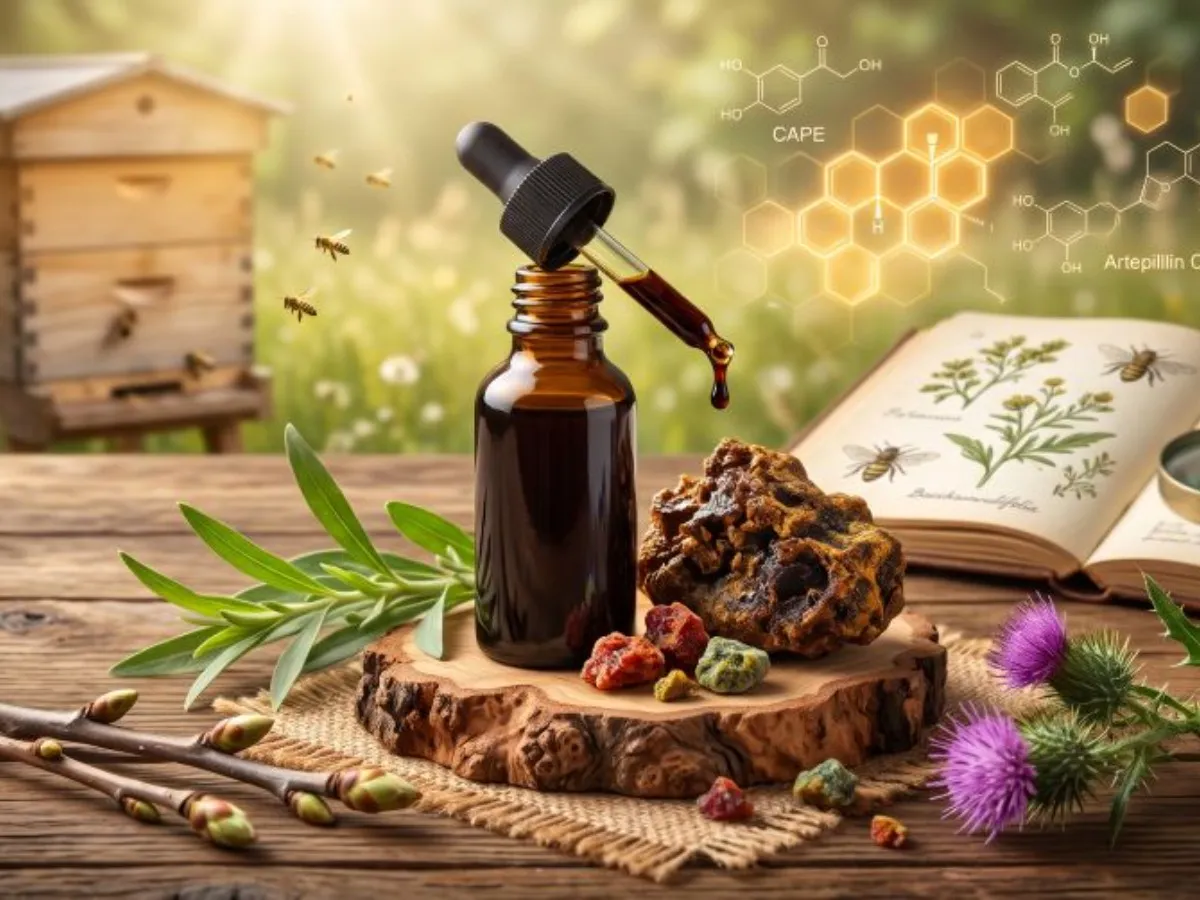
Secrets of Propolis
Much More Than "Bee Glue": The Science Behind the Healing Powers of Propolis
If you peek inside a beehive, you will discover that it is one of the most sterile and clean environments in nature—even more so than a typical hospital operating room. The secret to this cleanliness isn't the honey, but a dark, sticky substance called propolis. Bees collect resin from trees and plants, mix it with enzymes from their saliva, and create a chemical "defense wall" used to seal, insulate, and most importantly—disinfect the hive from viruses and bacteria.
For thousands of years, humans have used propolis to heal wounds and infections. Today, however, modern research laboratories are discovering that propolis is much more than just a folk remedy. It is a natural "pharmaceutical factory" containing over 300 active compounds. Here is what science is revealing about this remarkable substance:
How Does Propolis Work? (The Magic Under the Microscope)
Comprehensive scientific reviews testing propolis under laboratory conditions reveal that it attacks diseases on several different fronts simultaneously:
Turning Off Inflammation: Propolis works through a mechanism very similar to well-known anti-inflammatory drugs (like Ibuprofen). It knows how to "switch off" the enzymes in the body that produce pain and swelling, but unlike chemical medications, it does so without irritating the stomach lining.
Breaking Down Bacterial Walls: Many bacteria (like those causing cavities or gum disease) build a slimy defensive wall called a "biofilm" to protect themselves from antibiotics. Propolis excels at penetrating this biofilm, disrupting the communication between bacteria, and breaking down their cell membranes.
The Viral Gatekeeper: Studies show that propolis has the ability to block viruses (such as the Herpes virus), preventing them from penetrating our healthy cells to replicate.
A Vacuum Cleaner for Toxins: Propolis is loaded with antioxidants that neutralize "free radicals"—the volatile particles that cause cell aging and chronic diseases.
The Propolis Menu: Not All Are Created Equal
Just as wine gets its flavor from the grape variety and the region it is grown in, propolis changes completely depending on the trees from which the bee collected the resin. Science currently divides propolis into three main "superstars":
1. Brown (European) Propolis
Where is it from? This is the most common propolis in Europe, North America, and the Middle East. Bees produce it primarily from the resin of Poplar trees.
What is its superpower? It contains a highly researched active compound called CAPE. This substance has been proven to be a potent anti-inflammatory, and it is widely used today to treat respiratory tract infections (sore throats, coughs) and in dermatology.
2. Green (Brazilian) Propolis
Where is it from? Extracted from a unique plant (Baccharis dracunculifolia) that grows only in Brazil.
What is its superpower? Green propolis is considered the "superstar" of the research world thanks to a rare compound called Artepillin C. Laboratory studies have proven its powerful anti-inflammatory activity, and it is currently being researched worldwide as a treatment for nerve regeneration (diabetic neuropathy—as is currently being tested in a clinical trial in Brazil), lowering blood sugar markers, and even as a supportive treatment slowing the development of certain cancer cells in the lab.
3. Red Propolis
Where is it from? Comes mainly from Brazil and Cuba, sourced from specific tropical plants.
What is its superpower? It boasts the strongest antioxidant activity of all propolis types. It is particularly researched for its ability to fight stubborn fungi (like Candida) and because it contains estrogen-like compounds that can help relieve menopausal symptoms.
From the Clinic to Reality: When is Propolis Proven to be Effective?
Herpes and Cold Sores: In a famous clinical study published in the journal Phytomedicine, an ointment based on propolis was compared to a conventional medical ointment (Acyclovir) for treating herpes. The group treated with propolis showed a significantly faster healing time and a higher percentage of sores that healed completely.
Hard-to-Heal Wounds: In modern dermatology, propolis ointments are used to accelerate the closure of severe wounds. A controlled trial found that applying propolis to diabetic foot ulcers stimulated collagen production and promoted rapid wound closure.
Oral Health (and Support for Cancer Patients): Because it is excellent at breaking down oral bacteria, propolis mouthwashes have been proven effective for treating gum inflammation (gingivitis). Furthermore, a controlled clinical trial proved that propolis mouthwashes significantly reduce the severity of "mucositis" (painful mouth ulcers) in cancer patients undergoing chemotherapy.
Winter and Respiratory Issues: Propolis throat sprays and syrups provide more than just "temporary relief." Studies show that using propolis can actually shorten the duration of sore throats and ear infections in children.
What to Know Before You Use It (Scientific Warnings)
Propolis is considered a very safe substance, but it has one catch: because it is derived from tree resin, a small percentage of the population may be allergic to it and develop a skin rash upon contact (contact dermatitis). It is always recommended to test a tiny amount before extensive use, especially if you have a known allergy to bee stings or hive products.
Additionally, since raw propolis does not dissolve in water, most high-quality products come as an alcohol-based extract (tincture), or in the form of capsules containing dry, concentrated powder for those who prefer to avoid alcohol or the strong, resinous taste.
Key Clinical Sources for Further Reading:
The Effect of Propolis on Herpes (HSV): Vynograd, N., et al. "A comparative multi-centre study of the efficacy of propolis, acyclovir and placebo..." Phytomedicine (2000). View Study
Wound Healing and Diabetic Foot Ulcers: Henshaw, F. R., et al. "Topical application of the bee hive product propolis is an effective treatment for diabetic foot ulcers..." Wound Repair and Regeneration (2014). View Study
Mouthwashes for Preventing Oral Ulcers in Cancer Patients (Mucositis): Tome, A. R., et al. "Propolis effectively reduces the severity and delays the onset of oral mucositis in cancer patients..." Supportive Care in Cancer (2021). View Study
The Mechanism of Green Propolis (Artepillin C): Paulino, N., et al. "Anti-inflammatory effects of a bioavailable compound, Artepillin C, in Brazilian green propolis." European Journal of Pharmacology (2008). View Study
Comprehensive Review of Propolis Biological Mechanisms: Pasupuleti, V. R., et al. "Honey, Propolis, and Royal Jelly: A Comprehensive Review of Their Biological Actions and Health Benefits." Frontiers in Pharmacology (2017). View Review
© 2026 האיגוד הישראלי לאפיתרפיה וכותבי המאמרים. כל הזכויות שמורות. מותר לצטט קטעים קצרים בציון המקור וקישור למאמר.