
Bee Products -
Understanding the Risks and Exploring the Options
When people look for ways to ease pain or improve their health, they naturally want to know how safe a treatment is. That question matters in apitherapy just as it does before taking medication, having an injection or undergoing surgery.
Honey, propolis, royal jelly, bee pollen and bee venom are natural substances with biological effects. Each has its own uses and risks. Responsible use begins with choosing an approach that suits the individual.
Honey — Generally Well Tolerated
Honey is generally well tolerated, and allergy to it is described as rare. In a controlled study, 46 people with pollen allergies consumed 30 grams of honey. No clear or serious allergic reaction was observed.
This is an encouraging finding about tolerance in the group studied. Anyone who has previously reacted to honey should seek medical advice before trying it again.
Read the study on honey tolerance
Propolis, Royal Jelly and Bee Pollen — Individual Sensitivities Matter
Propolis can cause itching, redness or allergic contact dermatitis—an itchy, inflamed skin reaction. If a new reaction develops, stop using the product and have it assessed.
In a Hong Kong survey, nine of the 461 people who had consumed royal jelly reported a reaction they associated with it—about 2%. These included skin symptoms, a runny nose and asthma. This figure represents self-reported reactions, rather than medically confirmed allergies or the rate of severe reactions.
Bee pollen deserves particular care in people with pollen allergies. Serious reactions have been reported, so gradually increasing the amount at home should not be treated as a medically supervised allergy treatment.
Read a report on allergic reactions to bee pollen
Bee Venom — Local Discomfort and Preparation for a Rare Emergency
Pain, redness, swelling and itching are recognised reactions to bee venom. The initial sharp sensation may fade quickly, while tenderness and swelling can last for days. A cold compress and appropriate skin treatments can help relieve discomfort.
For someone living with chronic pain, temporary discomfort may be an acceptable trade-off if treatment brings a meaningful improvement in movement, sleep or daily activities. That makes tracking the actual benefit essential.
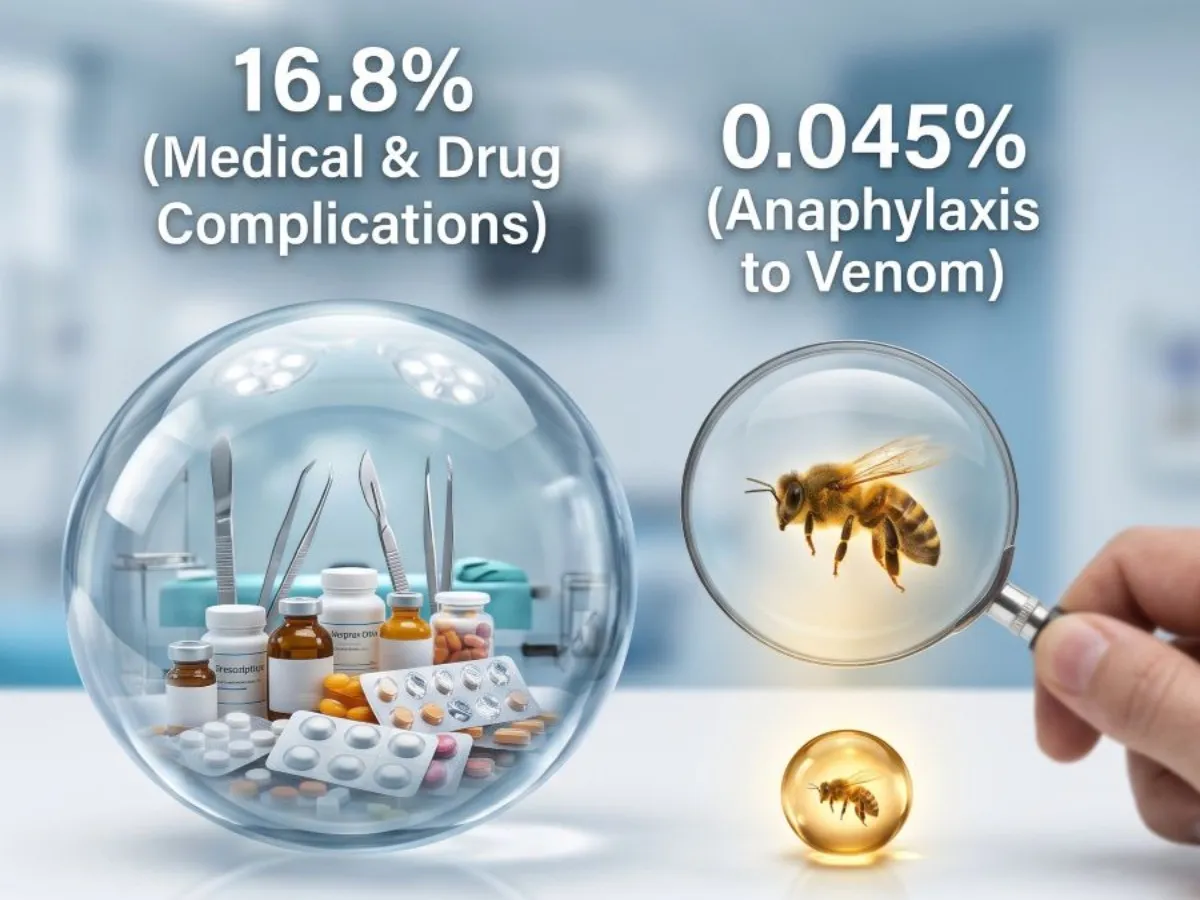
A review of studies involving 59,733 patients receiving bee venom injections reported 27 cases of anaphylaxis—a potentially life-threatening allergic reaction. The estimated rate was about 0.045%. This is a low reported rate, but it applies to the injection methods studied and is not an established risk estimate for live bee sting therapy.
Read the review on anaphylaxis following bee venom injections
In our practice, we assess each patient’s response during the first two sessions. As part of our course certification requirements, practitioners must be prepared for an emergency at every appointment, with an EpiPen available and knowledge of how to use it and call emergency services. Patients also receive products and guidance to help relieve itching.
Established Treatments Also Have Potential Risks
Medicines and surgery can offer substantial benefits, but they can also cause complications.
For anti-inflammatory medicines such as naproxen, prescribing information reports upper digestive tract ulcers, significant bleeding or perforation in about 1% of patients treated for 3–6 months and about 2–4% treated for a year. Kidney damage is another recognised complication.
Read about medicines and kidney damage
In an international study of 44,814 adults undergoing planned surgery that required a hospital stay, 16.8% developed at least one complication. The study included operations of varying complexity, so this figure does not represent the risk of every procedure.
Read the study on complications after surgery
These findings show why the safety of every treatment deserves consideration. They do not provide a direct numerical comparison with apitherapy: the conditions being treated, expected benefits, complications and follow-up periods differ.
Making an Informed Choice
Bee products deserve thoughtful consideration when exploring ways to improve health. Each product should be assessed in relation to the person using it and the results it delivers.
Safety depends on understanding the substance, reviewing medical history, tailoring its use, monitoring the response and being prepared to manage an unexpected reaction. This allows room for hope and potential benefit while giving people reliable information on which to base their decisions.
© 2026 האיגוד הישראלי לאפיתרפיה וכותבי המאמרים. כל הזכויות שמורות. מותר לצטט קטעים קצרים בציון המקור וקישור למאמר.