
The Hope in the Sting: What Science is Discovering About Healing Nerve Damage with Bee Products
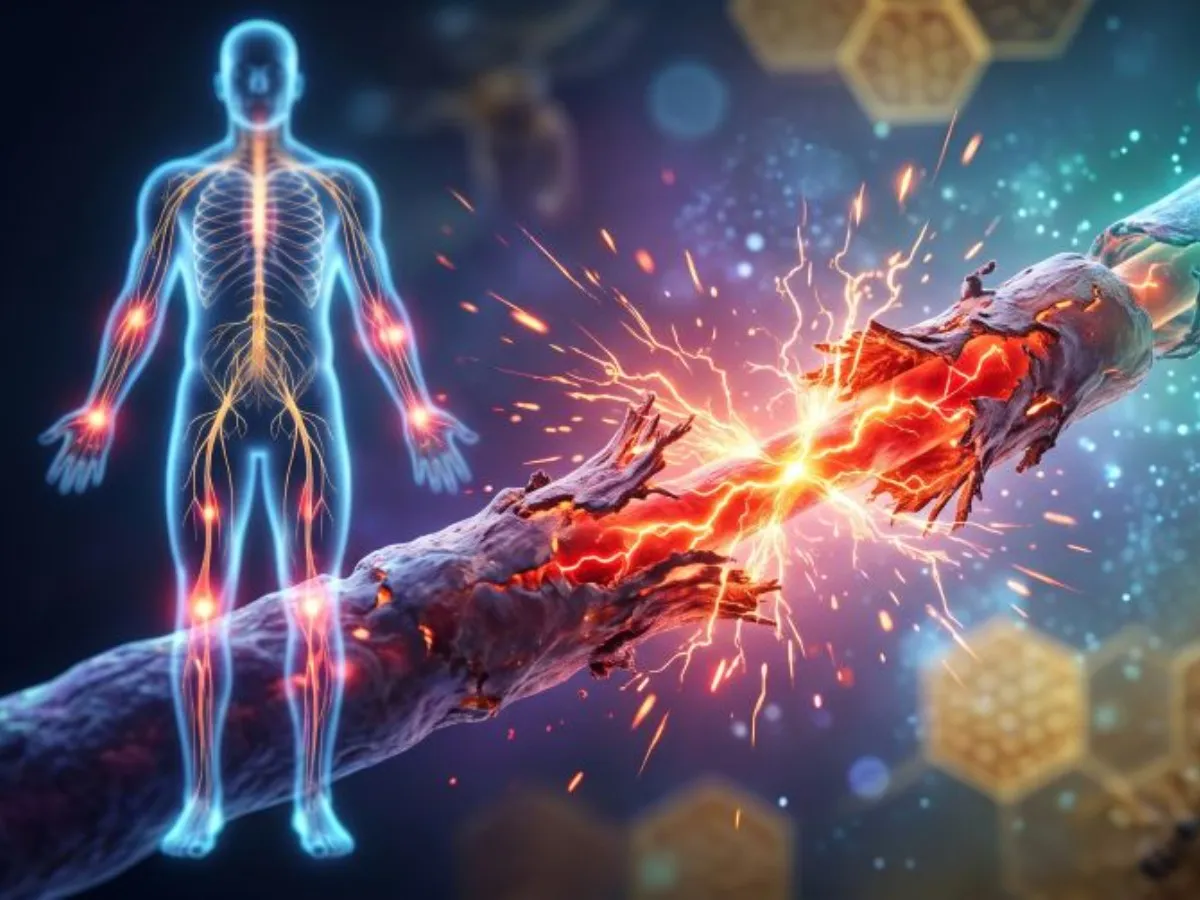
Imagine a sophisticated electrical system where the wires are starting to lose their insulation. Instead of a smooth current, you get short circuits, sparks, and false alarms constantly going off. That’s exactly what neuropathy feels like—a glitch in the body’s communication system where peripheral nerves (the wires connecting the brain and spinal cord to the rest of the body) send distress signals even when there's no actual danger.
The Root of the Short Circuit
Neuropathy isn't a disease on its own; it's the result of ongoing nerve damage. Common culprits include:
Diabetes: Chronically high blood sugar acts like an acid, slowly damaging the tiny blood vessels that feed the nerves and eroding their protective coating (the myelin sheath).
Chemotherapy: Life-saving cancer drugs can be highly toxic to peripheral nerves, leaving patients with Chemotherapy-Induced Peripheral Neuropathy (CIPN) long after they’ve beaten the disease.
Physical Trauma: Cuts, crush injuries, or herniated discs that mechanically pinch and damage the nerve root.
"Like Walking on Broken Glass": What It Actually Feels Like
For those who haven't experienced it, the intensity of neuropathic pain is hard to grasp. It’s not a regular ache or a pulled muscle. Patients describe intense burning in their feet, sudden electrical shocks, or the sensation of a thousand marching ants under their skin. One of the most frustrating symptoms is "allodynia"—a condition where even the lightest touch, like a bedsheet resting on your leg or a cool breeze, is registered by the brain as searing pain. This takes a severe toll on sleep, mobility, and mental well-being.
The Hive’s Pharmacy
Western medicine primarily offers drugs designed to mask the pain or dull brain activity. However, these often come with heavy side effects and rarely heal the root cause—the damaged nerve itself. This is where Apitherapy (bee product therapy) steps in, offering a completely different approach: it doesn't just relieve pain; it prompts the body to repair the damage.
Propolis (The Nervous System's Electrician): Used by bees to seal and sanitize the hive, propolis turns out to be a potent anti-inflammatory and antioxidant. Studies show it has a rare ability to penetrate nerve tissues and help rebuild the damaged myelin sheath.
Bee Venom (Melittin): The main active compound in bee venom doesn't just numb pain; it triggers a healing response. It stimulates the division of cells responsible for rebuilding the nerve coating while simultaneously "switching off" pain receptors in the spinal cord.
What Does Global Research Say?
In recent years, labs and hospitals worldwide have started backing this traditional knowledge with impressive clinical data:
Turkey (2024) – Reversing Diabetic Damage: Researchers studying diabetic neuropathy found that propolis didn't just reduce inflammation—it actively caused "remyelination" (rebuilding of the myelin sheath). Under the microscope, the nerves of the treated group looked almost as healthy as those of the healthy control group.
South Korea – Life After Chemotherapy: A series of studies discovered that bee venom acupuncture (BVA) led to a sharp, rapid decrease in pain and cold sensitivity in patients suffering from chemo-induced nerve damage. The venom effectively blocked neuropathic pain pathways at the spinal cord level (See key studies: Melittin effect (2019) and BVA treatment (2017)).
Morocco (2023) – Accelerated Trauma Recovery: A study demonstrated that peripheral nerves damaged by physical trauma healed remarkably fast thanks to bee venom. While untreated nerves took about 40 days to recover, the venom-treated group regained normal motor function in just 14 days, outperforming even standard anti-inflammatory steroid treatments.
Brazil (2026) – The Green Propolis Clinical Trial: An active randomized controlled trial (RCT) is currently underway in Brazil, testing the ability of their unique Green Propolis (rich in a rare compound called Artepillin C) to reduce neuro-inflammation and improve real-world symptoms for patients living with diabetic neuropathy.
Voices from the Field: Patient Stories
Beyond the numbers and microscopes, reports from apitherapy clinics tell a moving human story. For those interested in first-hand recovery stories, professional platforms such as the Israel Apitherapists Association, the BeeLive clinic, and communities like the From Honey to the Sting Facebook group gather numerous clinical insights and testimonials.
Patients who had become dependent on walking canes, or stopped walking barefoot out of fear of sharp pain, report dramatic changes. They describe sleeping through the night for the first time in years without their feet "on fire," or feeling normal sensation gradually return to numb toes. While it doesn't happen overnight, the targeted nerve stimulation and increased blood flow allow the body to reboot its own healing system.
The combination of ancient natural wisdom and modern scientific breakthroughs is breathing new hope into nerve recovery. It marks a shift from simply "silencing the pain" to actual rehabilitation—allowing more and more people to walk on solid ground again, without fear.
© 2026 האיגוד הישראלי לאפיתרפיה וכותבי המאמרים. כל הזכויות שמורות. מותר לצטט קטעים קצרים בציון המקור וקישור למאמר.