
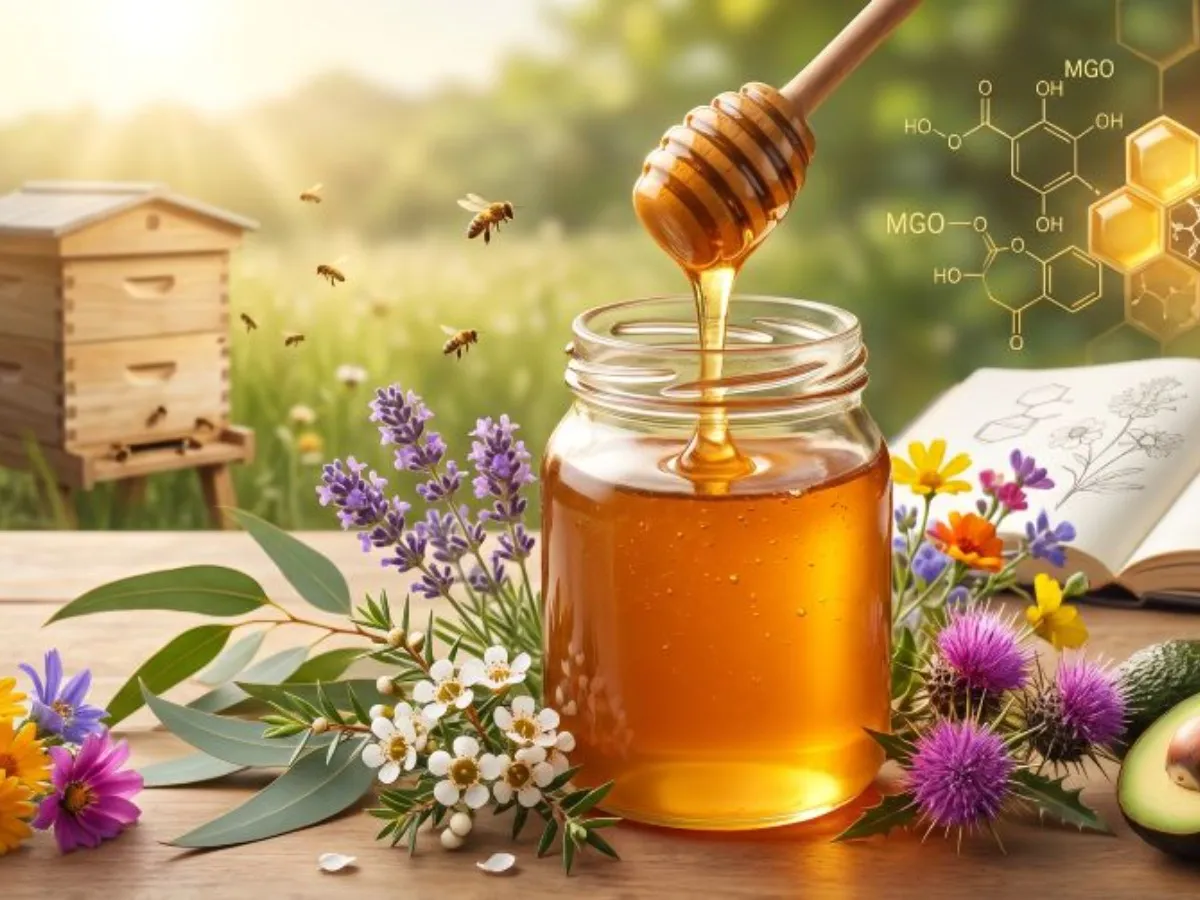
The Science of Healing Honey
Much More Than Just Sweetness: The Science Behind the Healing Powers of Different Types of Honey
We all know honey as the ultimate grandma's remedy for a winter tea, but in recent years, modern science and medicine have discovered that honey is much more than that. Beneath the sweet taste hides a complex, natural "pharmaceutical lab"—so much so that hospitals worldwide now use specific types of honey to treat stubborn infections and wounds.
So what exactly makes honey so powerful, and how do we know which honey is right for which problem? Here is what the research reveals:
The Hive's Secret Weapon: How Honey Fights Bacteria
Honey doesn't just work in one way; it attacks bacteria and infections on multiple fronts simultaneously. This multi-targeted approach is exactly why bacteria have such a hard time developing resistance to it:
The Sponge Effect (Osmosis): Honey is made of a lot of sugar and very little water. When it comes into contact with bacteria, it acts like a powerful sponge—it literally "sucks" the fluids out of the bacterial cells, dehydrating them to death while naturally cleaning the area.
A Hostile Environment (Acidity): Bacteria love neutral environments to multiply. Honey, however, is naturally acidic (with a pH level of 3.2 to 4.5). This acidic environment stops the growth of most harmful pathogens.
Slow-Release Hydrogen Peroxide: Bees add a special enzyme (Glucose Oxidase) to the nectar. When honey meets bodily fluids (like saliva in your throat or fluid from a wound), this enzyme slowly and gently releases hydrogen peroxide. It’s strong enough to disinfect and kill pathogens, but gentle enough not to burn or damage our body's own tissues.
Special Bee Proteins: A groundbreaking study published in the scientific journal FASEB found a unique antibacterial protein in honey called Defensin-1, which is produced by the bees themselves. This protein is capable of breaking down the protective walls of bacteria.
The Honey Menu: Which Honey Fits Which Problem?
Not all honeys are created equal. The medicinal properties of honey are directly derived from the type of flower (or tree) the bee collected the nectar from. A good rule of thumb in honey science is that the darker the honey, the higher its antioxidant content. Here are the matches that science has found:
1. Manuka Honey: The Wound and Burn Specialist
Where is it from? Produced from the Manuka bush in New Zealand and Australia.
What is it used for? Treating severe wounds, burns, and ulcers (like diabetic foot ulcers).
The Scientific Magic: Manuka contains a massive concentration of a compound called MGO—a potent bacteria-killer that isn't destroyed by heat or light. It is so strong that, according to comprehensive scientific reviews by Cochrane, it successfully helps heal infected burns and wounds that conventional medical systems struggle to treat. Hospitals use it in the form of sterilized "Medical Grade Honey" ointments.
2. Buckwheat Honey: Nature's Cough Syrup
Where is it from? From the flowers of the buckwheat plant. It is a very dark honey with a robust flavor.
What is it used for? Persistent coughs and upper respiratory infections, especially in children.
The Scientific Magic: It is packed with antioxidants. A famous clinical study published in the journal Pediatrics proved that buckwheat honey is more effective at soothing nighttime coughs in children than common over-the-counter cough syrups (like dextromethorphan). Thanks to these studies, the American Academy of Pediatrics (AAP) officially recommends honey as a first-line treatment for coughing in children over one year old (a conclusion supported by another major Cochrane review).
3. Honeydew (Forest) Honey: The Gut's Best Friend
Where is it from? Unlike regular honey, it’s not made from flower nectar, but from the sweet secretions of insects that feed on tree sap (like oak or pine).
What is it used for? Gut health, digestive issues, and boosting good bacteria.
The Scientific Magic: Forest honey is incredibly rich in minerals and "oligosaccharides"—complex carbohydrates that act as food (prebiotics) for the good bacteria in our gut. Laboratory studies even show it has an antibacterial effect that can inhibit the development of Helicobacter pylori, the bacteria responsible for stomach ulcers.
4. Avocado Honey: The Dark Energy & Mineral Bomb
Where is it from? Produced from avocado tree blossoms. It's a thick, almost black honey with a deep flavor reminiscent of molasses.
What is it used for? Chronic fatigue, mild anemia support, post-illness recovery, and anti-aging.
The Scientific Magic: Avocado honey is considered one of the richest honeys in nature when it comes to polyphenols and essential minerals like iron, potassium, and magnesium. Its high concentration of antioxidants helps the body neutralize "free radicals"—the particles that cause cell aging and inflammation, making it an excellent natural supplement for strengthening the body.
5. Thyme & Eucalyptus Honey: The Breath Openers
Where are they from? From Eucalyptus blossoms or the Thyme herb.
What are they used for? Phlegm, sore throats, and bronchitis.
The Scientific Magic: These plants contain strong essential oils that carry over into the honey. When we consume it, these compounds help thin mucus and soothe spasms and irritation in the respiratory tract.
6. Thistle Honey: The Immune and Digestive Defender
Where is it from? Produced from wild thistle blossoms. It is a relatively light honey with a delicate, slightly spicy taste.
What is it used for? General immune boosting, soothing skin inflammations, and supporting the digestive system.
The Scientific Magic: Wild thorny plants (like thistle and milk thistle) have strong phytochemical defense mechanisms to survive in harsh terrains, and these transfer into the nectar. Studies suggest that thistle honey features broad and highly effective antibacterial activity, and contains flavonoid compounds that help reduce inflammation in mucous membranes (like in the stomach or intestines).
7. Wildflower (Polyfloral) Honey: The Local Allergy "Vaccine"
Where is it from? Produced when bees gather nectar from a wide variety of seasonal wildflowers in a specific region, rather than a single plant species.
What is it used for? Preventing seasonal allergies (hay fever) and providing diverse immune support.
The Scientific Magic: Raw, unfiltered wildflower honey contains microscopic amounts of pollen from those exact flowers. The scientific concept is similar to immunotherapy (allergy shots): when an allergy sufferer eats local wildflower honey, they expose their immune system to micro-doses of the allergens. This gradual exposure through the digestive system helps "train" the immune system to stop overreacting. (Crucial tip: This only works if you buy locally grown honey from your specific living area, and ensure it is raw and unheated so the delicate pollen isn't destroyed).
What to Know Before You Use It (Scientific Warnings)
Babies: It is strictly forbidden to give honey of any kind to infants under one year old. Their digestive systems are not yet developed, posing a rare but fatal risk of infant botulism.
Diabetes: While honey has a slightly lower glycemic index than white sugar, it is still sugar and will spike blood glucose levels. Diabetics should consume it carefully and monitor their levels, even though some studies indicate it has a slightly milder effect on blood sugar markers compared to refined sugar.
Open Wounds: Never apply regular supermarket honey to a deep, open wound. Food-grade honey can contain pesticide residue or bacterial spores. In medicine, only sterilized "Medical Grade Honey" is used for safe wound dressing.
Key Clinical Sources for Further Reading:
Antibacterial Activity (Bee Defensin-1): Kwakman P.H., et al. "How honey kills bacteria". The FASEB Journal (2010). View Study
Cough Treatment in Children: Paul I.M., et al. "Effect of honey, dextromethorphan, and no treatment on nocturnal cough and sleep quality". Pediatrics (2007). View Study
Cochrane Review (Cough): Oduwole O., et al. "Honey for acute cough in children". Cochrane Database of Systematic Reviews (2018). View Review
Cochrane Review (Wounds and Burns): Jull A.B., et al. "Honey as a topical treatment for wounds". Cochrane Database of Systematic Reviews (2015). View Review
© 2026 האיגוד הישראלי לאפיתרפיה וכותבי המאמרים. כל הזכויות שמורות. מותר לצטט קטעים קצרים בציון המקור וקישור למאמר.